Catalytic converter value: How exactly does it work?
The value of a catalytic converter is largely determined by the precious metals it contains, particularly rhodium, palladium, and platinum. Of these three, rhodium has the highest value and therefore has a significant impact on the catalytic converter’s value, as it is the rarest precious metal found in a catalytic converter.
The History of the Catalytic Converter Value
But a few years ago, it was the price of palladium that had a significant impact on the value of a catalytic converter. In fact, the situation was so severe that the proportion of palladium used in the production of new catalytic converters was drastically reduced, and more platinum was used instead, since for years, more platinum had been produced than consumed.
In a few years, this will come back to haunt us, because platinum is now being mined at a structurally lower rate. This is due to ongoing power shortages in South Africa, which are causing a decline in production. Combined with increased demand for the precious metal, this is leading to an unprecedented price surge and, consequently, a higher value for used catalytic converters.
That sounds simple, but there are other factors to consider. The make, the type of engine, the weight of the vehicle, and current market prices all combine to determine the value of your catalytic converter. We’ll explain this step by step below.
Which metals determine the value of a catalytic converter?
Every catalytic converter contains a ceramic or metal substrate coated with a washcoat rich in precious metals. These precious metals are what give the catalytic converter its value. Rhodium converts nitrogen oxides, while palladium and platinum break down carbon monoxide and unburned hydrocarbons. All three are scarce and therefore valuable.
- Rhodium: the rarest of the three, its price has risen sharply in recent years, and it accounts for a large portion of the total value
- Palladium: is present in higher concentrations than rhodium, but has a lower market value per gram
- Platinum: is used less frequently in modern gasoline catalytic converters, but plays a more significant role in diesel engines
The exact composition varies by manufacturer and vehicle type. A catalytic converter from a larger engine typically contains more precious metals than one from a small city car.
Why does the price of rhodium have such a big impact?
Rhodium is mined in extremely small quantities, primarily as a byproduct of platinum and palladium mining in South Africa. Because there are virtually no alternatives and demand from the automotive industry is high, the price can fluctuate wildly. In 2021, rhodium reached a peak of more than $25,000 per troy ounce. That’s not a typo.
Even a fraction of a gram of extra rhodium in a catalytic converter can make a significant difference in the total yield when market prices are high. At the same time, the reverse is true: if the price of rhodium drops sharply, the value of the catalytic converter drops as well, regardless of other factors.
| Precious Metal | Typical content per catalyst | Impact on value |
| Rhodium | 0.5–2 grams | High (highly sensitive to market price) |
| Palladium | 2–7 grams | Moderate to high |
| Platinum | 1–5 grams | On average (depending on the type) |
How do you calculate the catalytic converter value?
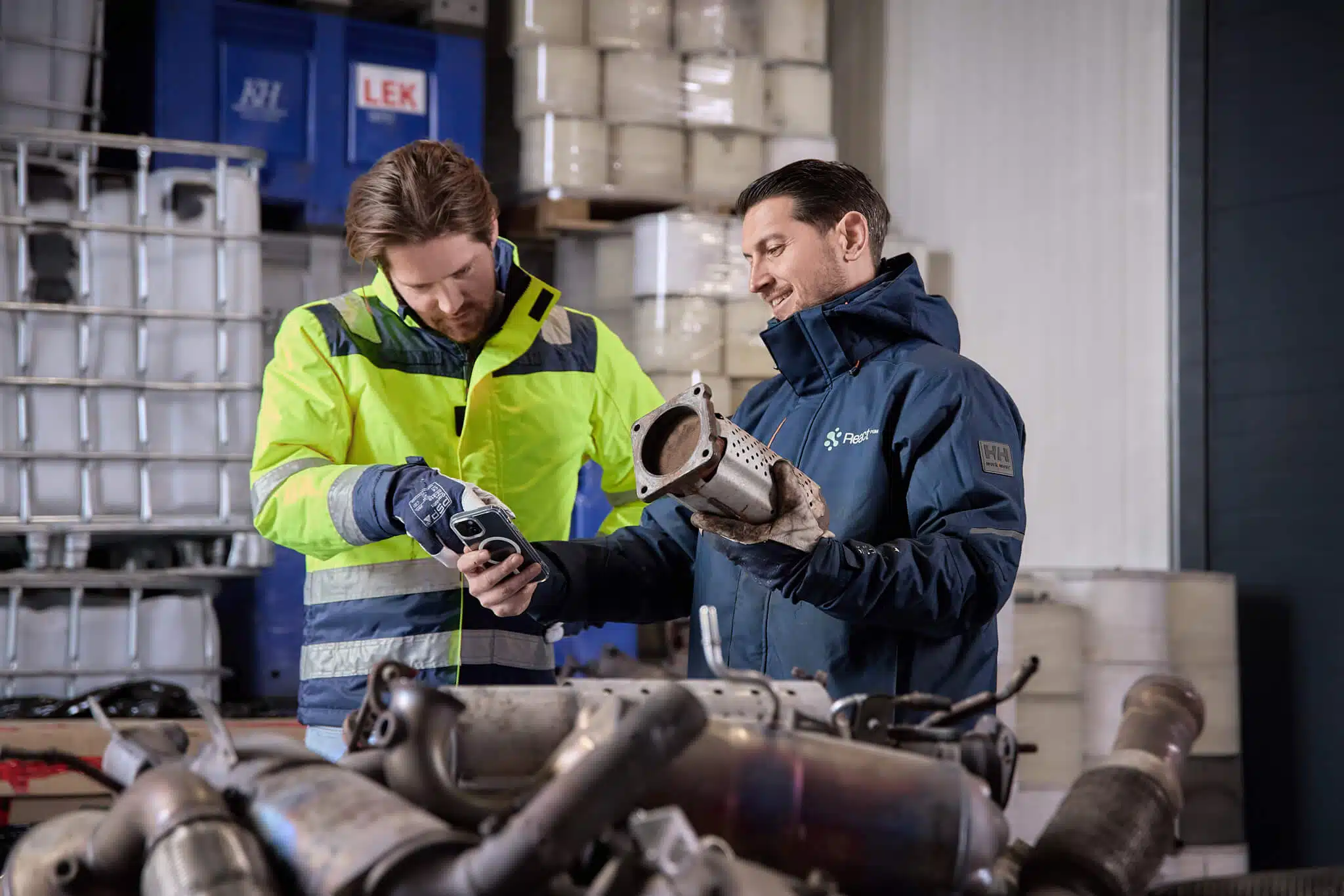
It’s difficult to calculate the exact value of a catalytic converter on your own without spectral analysis of the precious metal content. What you can do, however, is look up the catalytic converter’s part number and compare it with current price lists. At Krommenhoek Metals, you’ll find up-to-date information on the page about catalytic converter prices.
What the model number doesn't always reveal is the actual condition of the catalyst. A damaged or burnt-out catalyst yields less, because some of the precious metals have already been lost or are more difficult to recover.
Is it worth turning in a catalytic converter?
Yes, in the vast majority of cases. Even a typical catalytic converter from a passenger car contains precious metals with a market value ranging from tens to hundreds of euros, depending on current market prices. For truck catalytic converters or those from larger engines, the amounts are substantially higher.
It’s important to work with a company that’s transparent about pricing and inspection. When you recycle catalytic converters through Krommenhoek Metals, you know exactly what to expect. For over 100 years, their word has been their bond, and their price has been their price.
What sets Krommenhoek Metals apart when it comes to purchasing catalysts?
We use current market prices and factor them directly into the compensation you receive. No vague settlements after the fact, no unclear discounts. Because we handle everything in-house, no margin is lost to intermediaries. You get what the market is worth.
Do you have multiple catalysts or a larger order? If so, it’s worth getting in touch with us for a customized quote. Expert advice and personalized service aren’t just empty phrases for us—they’re simply the way we’ve been doing business for generations.
FAQ
How is the value of a catalytic converter determined?
The value depends on the type and amount of precious metals in the catalytic converter (rhodium, palladium, and platinum), the current market prices of those metals, the catalytic converter’s part number, and the physical condition of the substrate. A damaged catalytic converter is worth less.
How much rhodium is in a standard catalytic converter?
It varies by vehicle, but the average passenger car catalytic converter contains roughly 0.5 to 2 grams of rhodium. That may not sound like much, but with high market prices, even that small amount represents a significant value.
Why does the price of rhodium fluctuate so much?
Rhodium is mined in very limited quantities, almost exclusively as a byproduct of platinum and palladium mining in South Africa and, to a lesser extent, in Russia and Canada. Supply is therefore inelastic, while demand from the automotive industry remains high. This makes the price sensitive to even minor disruptions in supply or demand.
Can I figure out on my own how much my catalytic converter is worth?
The part number and a current price list will get you a long way. But the exact value also depends on the condition of the catalytic converter. For example, if the ceramic block is broken, precious metals have most likely been lost, and the price may be lower. Check the page on catalytic converter prices for current estimated prices, or contact us for a specific quote.
Is it better to sell a catalytic converter right away or wait for a higher price?
That’s a market prediction that no one can make with certainty. The price of rhodium could rise, but it could also fall sharply. The same applies, of course, to platinum and palladium. In addition, there’s always a chance of a breakthrough in the development of new catalysts, which could lead to the expensive precious metals being replaced by cheaper raw materials. This could result in lower demand and prices. If you can get a fair price based on the current market, that’s usually the wisest choice. Storing them also carries risks, such as damage or theft.
Need help?
Do you have any questions, or would you like immediate assistance? Our team is ready to provide you with personalized advice and the right solution.