The Difference Between Brass, Copper, and Bronze
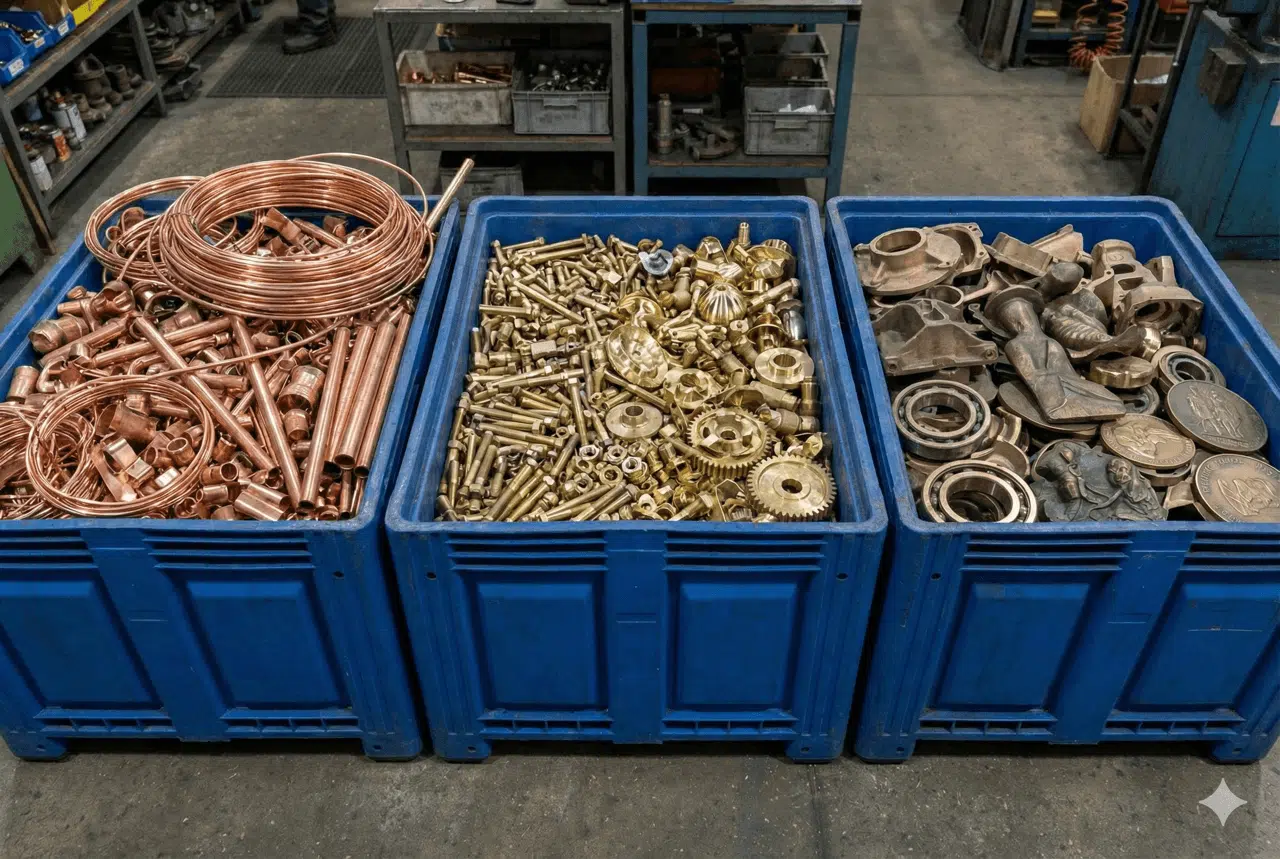
Copper is a pure metal. Brass is an alloy of copper and zinc, and sometimes contains small amounts of other elements such as aluminum or tin. Bronze is an alloy of copper and tin. These differences in composition result in different colors, properties, and scrap prices. This is good to know if you want to sell scrap metal and get the best price per kilogram.
What are the main differences between copper, brass, and bronze?
It starts with the composition. Copper (Cu) is the only pure metal of the three. It has a distinctive red color and is relatively soft. Because of its purity, copper conducts electricity and heat better than any other common metal. You’ll find it in electrical wiring, water pipes, and heat exchangers.
Brass is made by mixing copper with zinc (usually 58 to 80% copper). The result is a yellow to golden-colored metal that is harder than pure copper and is easy to work with. For example, faucets, fittings, locks, and musical instruments such as trumpets are often made of brass.
Bronze is the strongest of the three. The alloy of copper and tin (usually 80 to 90% copper) produces a hard, wear-resistant material with a dark golden-brown color. It is exceptionally resistant to corrosion in seawater. It is found in ship propellers, bearings, statues, and bells. Even in old shipwrecks—some of which sank centuries ago—wreck divers still come across bronze.
How do brass and pure copper differ in terms of composition and properties?
The difference between brass and copper lies in a single ingredient: zinc. This addition makes brass harder, less expensive, and more yellow in color. Copper is softer, red, and conducts electricity much better. For electrical applications, choose copper. For decorative or mechanical parts, brass is the smarter choice.
Another difference: when exposed to air, copper turns green. Brass, on the other hand, turns dark brown—never green.
All the differences at a glance
| Property | Copper | Brass | Bronze |
| Composition | Pure metal (Cu) | Copper + zinc | Copper + tin |
| Color | Reddish-brown / orange | Yellow to golden | Dark golden brown |
| Hardness | Soft, flexible | Harder than copper | The hardest of the three |
| Conductivity | Excellent | Fair | Low |
| Corrosion Resistance | Good (green patina) | Good | Very good (seawater) |
| Magnetic | No | No | No |
| Typical Applications | Wiring, piping | Faucets, fittings, locks | Ship parts, bearings, statues |
Is brass more expensive than copper and bronze?
No, brass is actually the cheapest of the three. That’s because zinc is a lot cheaper than copper or tin. You’ll see that when you turn it in as scrap: copper fetches the highest price, followed by bronze, then brass. The current daily prices are always listed on Krommenhoek Metals’ scrap prices page.
With a Staalpas, you automatically get a better price per kilo. The card is free, and you can sign up for it on your first visit.
How can you tell what kind of metal you have?
Color is the quickest clue. Reddish-brown or orange? Copper. Yellow or golden? Probably brass. Dark brown with a warm hue? Bronze. Copper and bronze also feel heavier than brass.
A magnet won't help here, because none of the three are magnetic. If in doubt, check for oxidation: a green patina indicates copper, while a dark brown tarnish could be brass or bronze.
Still not sure? Send a photo via WhatsApp to +31 6 13 662 187, and you'll get a quick estimate. It saves you the trouble of looking it up yourself.
Frequently Asked Questions
Can you explain in simple terms what the difference is between brass and copper?
Copper is a pure metal, reddish-brown in color. Brass is copper mixed with zinc, which makes it yellow, harder, and less expensive. Use copper for electrical wiring, and brass for faucets and fittings.
Is it worth turning in old brass or copper?
Absolutely. All three metals have significant scrap value. You can drop them off at our locations in Rotterdam (Keenstraat 28) and Wateringen (Maasdijkseweg 138). We weigh the scrap on the spot and pay you immediately. For larger quantities, we’ll pick them up or provide a container. We’ve been doing this for nearly a hundred years with transparent pricing.
Are brass, copper, and bronze magnetic?
No, none of the three react to a magnet. So a magnet test doesn’t help distinguish between them, but it does rule out iron and steel. There is one exception, however: a CuNiAl ship propeller. If you hold a magnet up to it, it will react very slightly. This is because the alloy contains a few percent iron. If the ship’s propeller is made of brass, the magnet will not be attracted to it at all.
Need help?
Do you have any questions, or would you like immediate assistance? Our team is ready to provide you with personalized advice and the right solution.