VAT Reverse Charge Mechanism for the Sale of Scrap Metal: How It Works
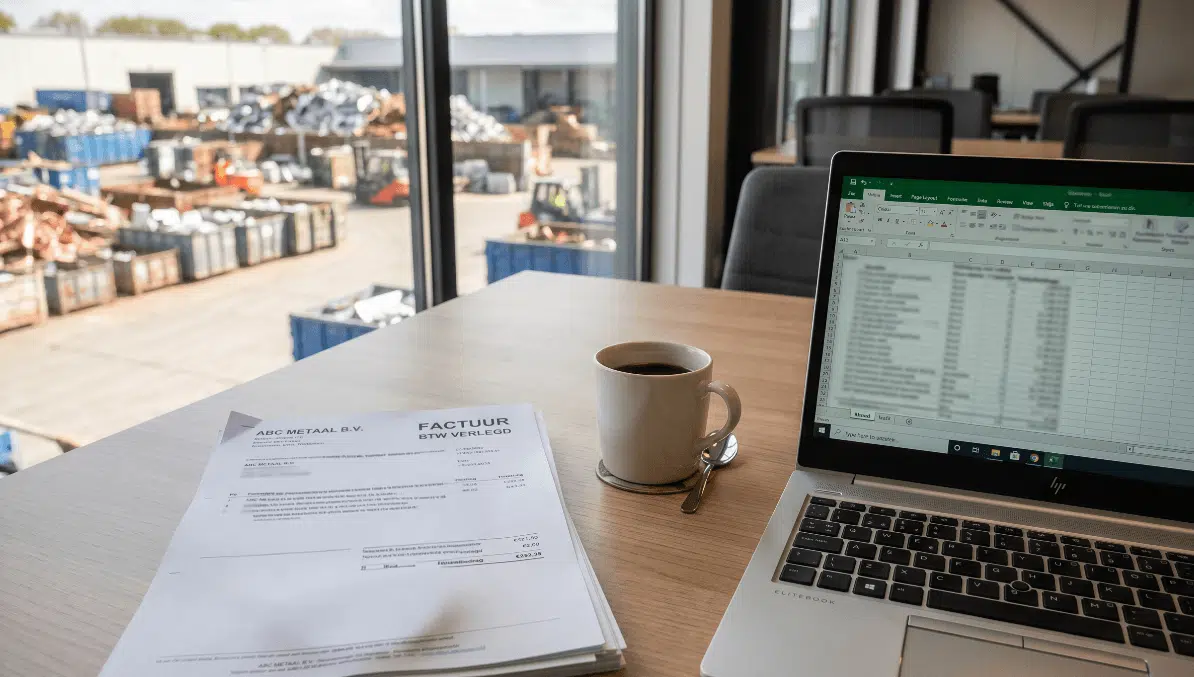
As a business owner, do you sell scrap metal to a scrap dealer? In that case, the invoice will not show any VAT, but will include the notation “VAT reverse-charged.” This is because the VAT liability shifts from you, as the supplier, to the scrap dealer, as the buyer. That may sound cumbersome, but in practice, it has a net-neutral effect for most VAT-liable business owners. Still, it’s important that your records are accurate, as errors can lead to additional tax assessments. Below, you’ll find a detailed explanation of how the VAT reverse charge mechanism works for scrap metal, when it applies, and what you need to know to handle it correctly.
What is the VAT reverse charge mechanism?
The VAT reverse charge mechanism is a specific Dutch VAT rule, set forth in Article 12(5) of the 1968 Turnover Tax Act in conjunction with Article 24bb of the 1968 Turnover Tax Implementation Decree. For certain transactions in the metal and waste industries, the VAT liability is shifted from the supplier to the customer. Specifically, this means the following:
- The scrap metal supplier does not charge VAT on the invoice.
- The invoice must include the phrase “VAT reverse-charged.”
- The invoice includes the customer's VAT number, which the supplier has verified in advance.
- The customer reports the VAT on their own in their VAT return and generally deducts it immediately as input tax.
For businesses eligible for a full VAT deduction, this has a net-zero effect. But why does the rule exist, then? The goal is to prevent fraud. In the past, there were frequent instances of VAT abuse in the scrap and recycling industry (where suppliers failed to remit the VAT they had collected). By shifting the liability, that risk is eliminated.
When does the reverse charge mechanism apply to scrap metal?
The rule does not apply universally. It applies specifically to business-to-business (B2B) transactions within the recycling chain. There are two main situations in which the reverse charge applies:
- Delivery of scrap metal in exchange for payment. This includes the sale of scrap metal, scrap iron, metal waste, or metal byproducts to a licensed scrap dealer.
- Processing service for a fee. This includes the pressing, sorting, or processing of scrap metal by a waste processor in exchange for payment.
The VAT reverse charge mechanism applies to both situations.
Please note: The reverse charge mechanism applies only if the customer is a business with a valid VAT number. As a supplier, you are required to verify that number and include it on the invoice before applying the mechanism. If you fail to do so, the Tax Authority may still assess the VAT against you.
Does the reverse charge mechanism also apply if you, as a private individual, turn in scrap metal?
No. Private individuals are not covered by the VAT reverse-charge mechanism. If you, as a private individual, turn in scrap metal, the standard VAT rules apply. In practice, this means that no VAT is charged on small quantities of scrap metal turned in by private individuals. This is simply because private individuals do not file VAT returns.
Are you self-employed or a small business owner? If so, it depends on whether you’re required to collect and remit VAT. If you are, the reverse charge mechanism applies to you as a business customer.
To which metals does the reverse charge mechanism apply?
The regulation applies to a wide range of metals and metal scrap. Typical examples include scrap iron and steel, copper, aluminum, lead, zinc, brass, and stainless steel. The regulation also generally applies to cables and wire, printed circuit boards and e-waste, as well as specialty metals and alloys in business transactions.
Is it mixed waste or materials where you're not sure if the regulation applies? Contact your accountant or tax advisor. They can explain exactly how your specific situation works.
Turn in your scrap metal at Krommenhoek Metals
At Krommenhoek Metals, the process is handled transparently. Your metal is weighed using digital scales, the price is determined immediately based on the current market rate, and payment is made in the manner of your choice: in cash or via direct bank transfer.
Do you submit your business transactions? We’ll handle the correct processing and invoicing, including the reverse-charge mechanism where applicable. That way, you don’t have to worry about it yourself.
- Two drop-off locations: Rotterdam (Keenstraat 28) and Wateringen (Maasdijkseweg 138)
- Nationwide container service for large volumes
- Current scrap prices updated daily on our scrap prices page
- Quick contact via WhatsApp: +31 6 13 662 187
Do you have more than 1,000 kg of scrap metal? You may be eligible for our free pickup service. Call or text us to find out more.
“The information in this article is intended solely for general informational purposes and has been compiled with the utmost care. Despite this care, the information may be incomplete, outdated, or incorrect. No rights may be derived in any way from the content of this article, including the VAT provision(s) and tax rules mentioned herein. We are not liable for any damages resulting from the use of this information. It is advisable to always consult a professional advisor regarding complex tax or legal issues.”
Need help?
Do you have any questions, or would you like immediate assistance? Our team is ready to provide you with personalized advice and the right solution.