Should you strip the copper or not? What are the real benefits of stripping cable?
Whether stripping cables is worth it depends on two things: how much copper is in the cable and how much time you put into it. A plastic-insulated cable is worth less than clean, bare copper. Still, that doesn’t mean stripping is always worth the effort.
At Krommenhoek Metals, we see people coming in every day with bags of stripped cable. Sometimes that’s a smart choice. Other times, it would have been just as convenient to turn in the cable as-is. Below, you can read how to assess this for yourself in advance—and how we can help you with that.
What is the price difference between insulated copper and bare copper?
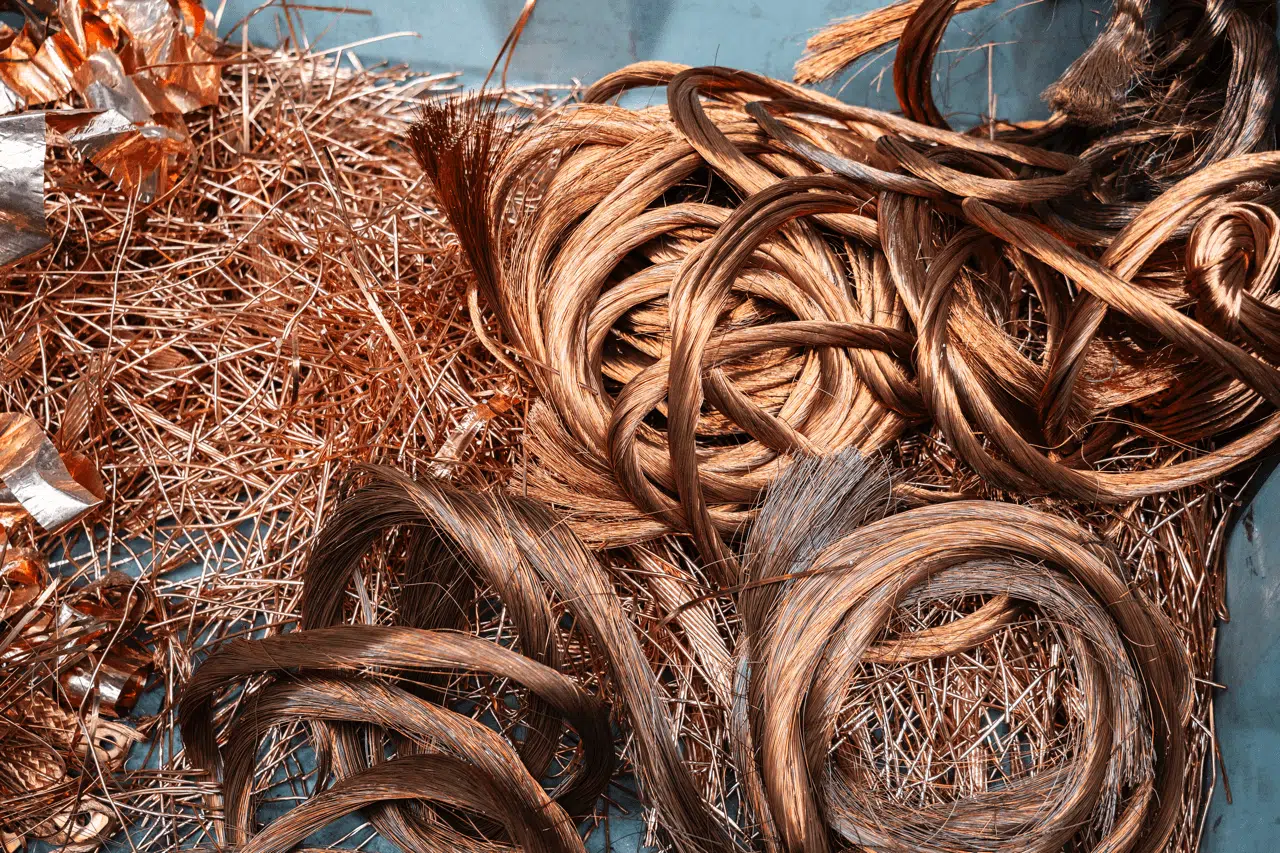
Bright copper, also known as hand-peeled copper, is the purest metal you can sell to Krommenhoek Metals. No insulation, no oxidation, no additives: pure and clean hand-peeled copper wire. That commands the highest price. You’ll see that reflected in our prices for copper and hand-peeled copper.
A cable wrapped in plastic or rubber consists of insulated copper: part copper, part insulation. We don’t pay for that insulation. In fact, it costs money to dispose of it at an incinerator or a specialized plastics recycler. That’s why the price of scrap cable is significantly lower than the price of copper. Exactly how much copper it contains depends on the type of cable. A standard cable contains at least about 38% copper. The thicker the copper core and the less insulation, the more worthwhile stripping becomes, because, on balance, the proportion of copper increases relative to the contaminants.
By the way, not every type of cable is valued the same way by us. Old cable, underground cable, and aluminum PVC cable are listed separately in our scrap prices. Be sure to check there for the current price, since we update them several times a day. And if you’re unsure about the quality, feel free to send us a message beforehand. It’s the easiest and most transparent way to go.
When is it worth stripping a cable, and when isn't it?
The math is simple. Compare what you get for the cable with the insulation still on to what the pure copper inside is worth. Subtract your time from that. If you end up with a profit, it’s worth stripping the cable. If not, just turn in the cable with the insulation still on.
| Cable Type | Is stripping worth it? |
|---|---|
| Thick installation or power cable | That's often the case—a lot of copper per kilogram |
| Electrical cable with thin conductors | Sometimes, depending on the amount |
| Coaxial cable | Usually not; there's not much copper, and it's hard to strip (with some exceptions) |
| Phone or data cable | No, not enough copper and the wires are too thin to strip by hand |
In most cases, stripping a coaxial cable is therefore not worth the effort. It contains very little copper, and because of its construction—which includes foil, braiding, and a plastic core—it takes a long time. The same applies to thin data or telecom cables. There are exceptions, of course.
A few rules of thumb:
- Do you have a lot of thick installation cable? In that case, it's often worth stripping the copper.
- Thin or mixed cables in small quantities? Please submit them insulated.
- Not sure? Send us a photo via our WhatsApp service. We’d be happy to take a look with you.
Installers and demolition companies, in particular, supply us with larger batches of cable. If you’re working with large volumes, the decision between stripping the cable yourself or turning it in with the insulation intact comes up quickly.
How do you strip a cable correctly and safely?
Always start by checking that the cable is de-energized. Safety comes first. Only then should you begin working.
The fastest and safest way to do this is with a wire stripper. It cuts through the insulation to the correct depth without touching the copper wire. If you damage the copper, the quality—and therefore the price—will drop.
You can also strip a cable without wire strippers, but it requires more care. Take a utility knife and cut along the length of the cable, not across it. Keep the blade flat and cut only the insulation. The copper underneath is softer than you might think.
Also, here's something else:
- Work on a stable surface and keep your fingers out of the cutting path.
- Stripping thin copper wires requires precision. Use a wire stripper, not a knife.
- Don't throw the insulation scraps in with the metal. That will add to the weight and could result in a deduction when you turn it in.
What are the specific benefits of stripping cable?
Exactly how much you’ll end up with depends on the copper content and the time you put into it. Do the math ahead of time using current scrap prices, so you’ll know whether stripping it is worth the effort before you start. That’s how we prefer to work: no surprises at the weigh station, just a fair price for what you turn in.
Are you bringing in small quantities? Then feel free to stop by one of our locations in Rotterdam and Wateringen without an appointment. We’ll weigh your cable or copper and pay you immediately—in cash, by bank transfer, or via Tikkie. Do you have larger quantities? With our container service, we’ll pick them up from you. For quantities over 1,000 kg, you may be eligible for our free pickup service.
We then process the cable in an environmentally sustainable way. We strip thick cables by hand, which produces clean strands of copper. That’s where the term “hand-stripped copper” comes from. Thinner cables go through the cable shredder, which separates the copper from the plastic. With a Staalpas, you’ll also get a higher price, and with Staalpas+, you’ll receive your payment immediately.
Whether you’re a private individual with a few rolls of leftover cable or an installer who disposes of larger quantities every week, your metal supplier is here to work with you. For us, personalized service also means giving you an honest answer—even if that answer is: “Forget it—just turn it in as is.”
Frequently Asked Questions About Stripping Cable
Is it worth stripping a coaxial cable?
Usually not. Coaxial cable contains very little copper, and its layered construction makes it difficult to strip. The time you spend on it almost never outweighs the extra profit. Turning it in with the insulation intact is usually the smarter choice.
Can I strip a wire without wire strippers?
Yes, you can do it with a utility knife. Cut along the cable, not across it, and be careful not to damage the copper. For thin wires, it’s better to use a wire stripper. Damaged copper is worth less when you turn it in.
How much copper is in a cable?
A standard cable contains at least about 28% copper. Thick installation and power cables contain more than that, while thin data and coaxial cables contain less. Not sure about your cable? Send us a photo via the app, and we’ll estimate it for you.
What should I do with the leftover insulation after stripping it?
Insulation scraps are made of plastic or rubber and do not belong with your metal drop-off. Dispose of them separately in the general waste or the plastic bin. Including insulation with your copper will result in a weight deduction or a lower price when you turn it in.
Can I also have a stripped cable picked up?
For small quantities, just stop by the yard. For larger volumes, we offer a container service, where we’ll pick up the container from you. Contact us or send us a message to discuss the options for your situation.
Need help?
Do you have any questions, or would you like immediate assistance? Our team is ready to provide you with personalized advice and the right solution.