What do you need to know about car batteries as scrap?
What do you need to know about car batteries as scrap?
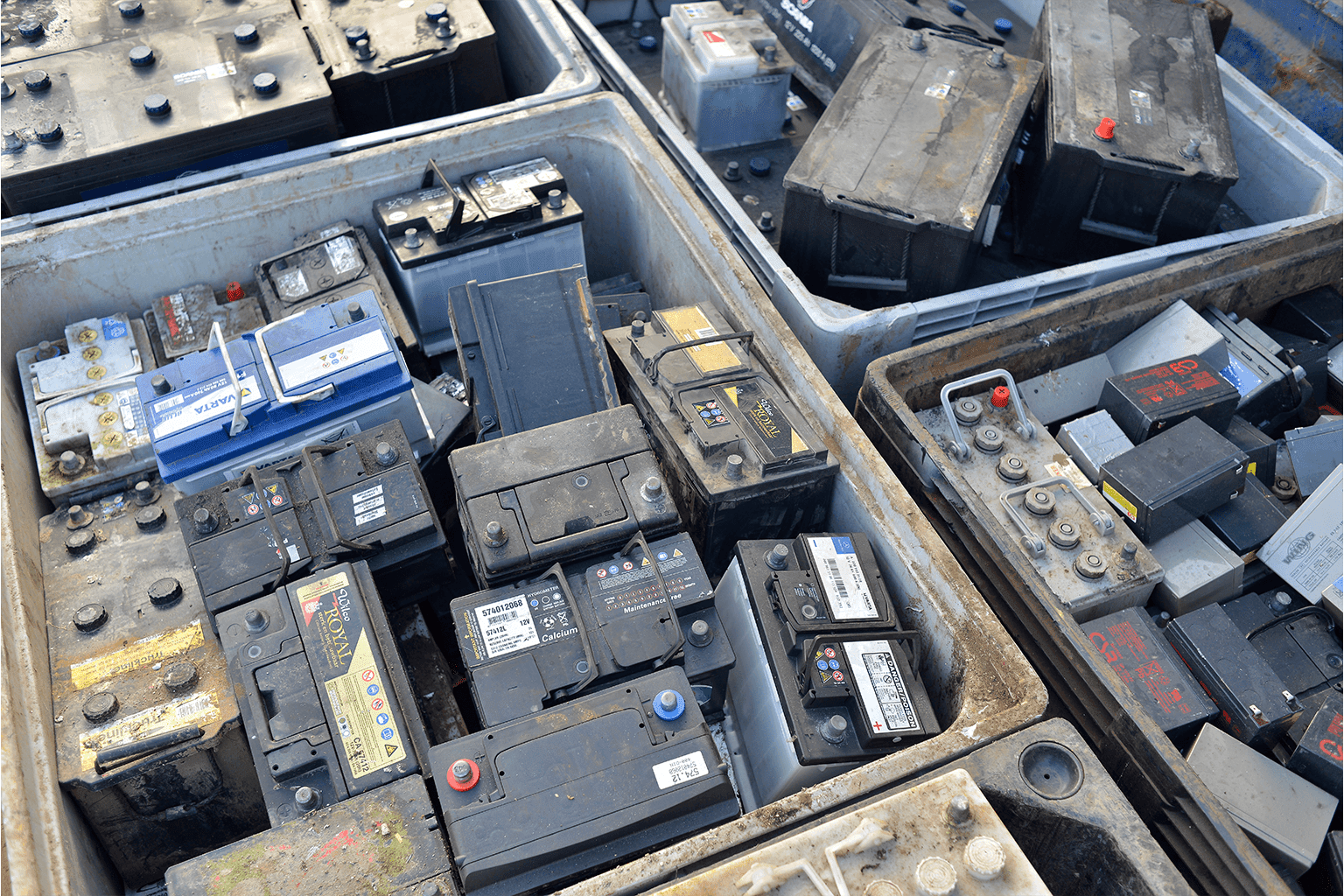
A car battery that no longer works is both valuable scrap and hazardous waste. The lead and sulfuric acid in the battery require certified processing, but that same lead makes the battery financially worthwhile to turn in. Below, you can read about what makes a car battery valuable as scrap, how much it’s worth, how to transport it safely, and where it’s best to drop it off.
What is a car battery, and why is it considered hazardous waste?
In virtually all standard passenger cars, the car battery is a lead-acid battery. It provides the power needed to start the engine and supply the vehicle’s electronics. What makes it useful as a product is precisely what makes it problematic as waste: lead and sulfuric acid. For this reason, lead-acid batteries are classified as hazardous waste under European regulations, with the Eural code 16 06 01.
This has practical implications. You are not allowed to dispose of a car battery with general waste, in an underground container, or—certainly not—in a ditch or park. It belongs at a municipal recycling center or, if you want to get some money back for it, at a certified scrap dealer.
How does a lead-acid battery work, and what harmful substances does it contain?
A lead-acid battery operates based on a chemical reaction between lead plates and sulfuric acid. During discharge, lead sulfate is formed, and during charging, that reaction reverses. An average 12-volt car battery contains:
- Lead plates (anode and cathode), accounting for 60 to 70 percent of the total weight
- Diluted sulfuric acid as an electrolyte, approximately 25 percent
- A polypropylene housing with fiberglass or PVC partition plates
Lead is toxic and accumulates in the body and the environment. Sulfuric acid is highly corrosive and can cause burns, eye injuries, and soil contamination if it leaks. Both substances remain present, even in an empty or defective battery. Therefore, you must treat it as if it were full until it is disposed of.
Why can't you just throw a car battery in the trash?
The combination of lead and sulfuric acid is exactly what you don’t want to release into the environment uncontrolled. If a battery ends up in a landfill or in the natural environment, the acid can leak out and lead can seep into the soil and groundwater. Once in the soil, lead is virtually impossible to remove.
In the Netherlands, it is simply prohibited to dispose of car batteries with regular trash. Hazardous waste must be disposed of through a registered collector or a municipal recycling center. Violations are subject to fines. In addition to fines, companies that fail to dispose of hazardous waste properly risk reputational damage and enforcement actions by the Environmental Agency.
How long do car batteries last, and when should you replace them?
An average car battery lasts four to six years. How you drive, the climate where you live, and how often your car goes through start-stop cycles all have a significant impact on its lifespan. Frequent short trips shorten the battery’s lifespan, as does cold weather. Watch for these signs:
- The engine starts more slowly, especially on cold mornings
- The battery icon appears on the dashboard
- The battery is more than five years old and has not been replaced before
- The case is swollen or has a crack in it
With those last two, it’s especially important to dispose of them quickly. A swollen or leaking battery in the shed poses a risk to your floor, your lungs, and your wallet if acid leaks onto the garage floor or driveway.
What is the difference between old and new car batteries when sold as scrap?
From a scrap dealer’s perspective, every car battery is essentially a lead-acid battery, but there are differences within that category. These days, three technologies are most common:
- Conventional (wet cells): the classic lead-acid battery with liquid sulfuric acid, found mainly in older cars
- EFB (Enhanced Flooded Battery): heavier-duty design, suitable for start-stop systems
- AGM (Absorbed Glass Mat): sulfuric acid absorbed into glass fiber, primarily used in modern start-stop and hybrid vehicles
This usually makes little difference in terms of scrap value. It’s the lead that counts, and all three types are lead-acid batteries. Important note: A lithium-ion battery from a hybrid or fully electric car is not a lead-acid battery and does not belong in the same category. We collect lithium batteries separately due to the fire hazard if they are damaged. If you’re unsure which type you have, check the battery label or send us a photo via WhatsApp.
How much is my old car battery worth as scrap?
The amount you receive for your old car battery depends on two factors: the battery’s weight and the current price of lead on the world market. An average passenger car battery weighs between 12 and 20 kilograms. A large battery from an SUV or van can weigh up to 25 kilograms or more.
Listing specific amounts on a blog page doesn't make much sense, because the price of lead fluctuates daily on the London Metal Exchange. For today's payment, you have two options:
- Check the current scrap prices or, specifically, the price of old batteries
- Download the Krommenhoek app, and you'll always have the price right in your pocket
For larger quantities, we offer customized solutions. If you have ten batteries or more, please contact us for a quote. If you have more than 1,000 kg of scrap, we’ll even pick it up for free.
How do you safely transport a car battery?
For private individuals, there is an exception to the strict rules governing the transport of hazardous materials in a passenger car. You are allowed to carry one battery for personal use, provided you follow a few guidelines:
- The battery is positioned upright so it won't tip over
- The battery must not leak or show any visible damage
- Transport it in a plastic container or sturdy bag, just in case any acid leaks out
- Do not transport together with loose items that could tear or shift
Is your battery swollen, cracked, or leaking? If so, do not transport it yourself. Send us a photo via WhatsApp, and we’ll advise you on the safest route. For larger quantities of batteries, we can use our container service, and we’ll come pick them up at your location. For commercial transport in larger quantities, the full ADR regulations and additional requirements under the VIHB registration apply.
Recycling center or scrap yard: where’s the best place to drop it off?
Many people are unsure whether to take a car battery to the recycling center or a scrap yard. Both options dispose of your battery in accordance with the regulations, but in practice, the process differs quite a bit. The table below lists the main differences.
| Criterion | Recycling Center | Scrap Metal Business |
| Reimbursement | None | Well, based on weight |
| Processing | Through a third party | In-house |
| Certification | Variable | At Krommenhoek: ISO 9001, ISO 14001, End of Waste |
| Documentation | Limited | Documented and verifiable |
| Hours of Operation | Limited, often only on weekends | Often 6 days a week |
| Volume | Often limited per visit | No maximum |
At Krommenhoek Metals, we handle the entire process ourselves, from collection to processing. That means short lines of communication, immediate payment, and full transparency regarding what happens to your battery. For business customers, that makes all the difference: our certifications are the documentation you need to demonstrate your environmental compliance, whether for audits, accounting, or sustainability reporting.
For Businesses: Systematic Disposal of Car Batteries
Garages, installers, fleet managers, and transportation companies often collect batteries on a regular basis. For those volumes, a fixed collection arrangement is more efficient than making individual trips to the scrap yard. We offer:
- On-site container service, with containers in various sizes
- Free pickup for scrap metal weighing 1,000 kg or more
- Complete documentation through End-of-Waste certification and corporate social responsibility (CSR) policy
- Fixed-price agreements for regular shipments
Are you a fleet manager or sustainability coordinator who is required to submit annual reports? If so, certificates aren’t a luxury—they’re a necessity. We include them as standard, along with a Certificate of Destruction where applicable.
Why Krommenhoek Metals?
We have been operating as a family-owned metal trading company since 1925. On our centennial in 2025, we were awarded the title of “Purveyor to the Royal Household,” a distinction granted only to companies that have been in business for 100 years, are financially sound, and have a good reputation. Our customers rate us an average of 4.75 out of 5.
For your car battery, that means: expert advice, fair weighing on certified scales, transparent payment, and processing in full compliance with all regulations. Individuals with a single battery can count on the same level of service as businesses with containers full of batteries. You can drop off your batteries at one of our locations in Rotterdam (Keenstraat 28) or Wateringen (Maasdijkseweg 138).
Frequently Asked Questions About Car Batteries as Scrap
Can I transport a car battery in my car?
Yes, private individuals are allowed to transport them in limited quantities. Make sure the battery is upright, does not leak, and is placed in a plastic container. For commercial transport, the ADR regulations apply, and there are additional requirements.
Do I always get compensation for an old car battery?
Almost always. The payment depends on the weight and the current price of lead on the world market. You can find today's price on our scrap prices page.
What happens to my lead-acid battery after I return it?
The lead is recovered and reused in new batteries and other applications. The sulfuric acid is safely neutralized or processed. Nothing is released uncontrolled into the environment, and everything is traceable thanks to our certifications.
Is a leaking or swollen battery still worth anything?
Yes, even a defective lead-acid battery contains lead and has scrap value. But transporting it is risky. Send us a WhatsApp message with a photo, and we’ll advise you on the safest way to turn it in.
As a business, can I turn in large quantities of car batteries at once?
Absolutely. We offer on-site container service, place permanent containers wherever they fit, and pick up loads of 1,000 kg or more free of charge. For business-sized volumes, we offer fixed-price agreements.
Need help?
Do you have any questions, or would you like immediate assistance? Our team is ready to provide you with personalized advice and the right solution.