What metals are found in a catalytic converter?
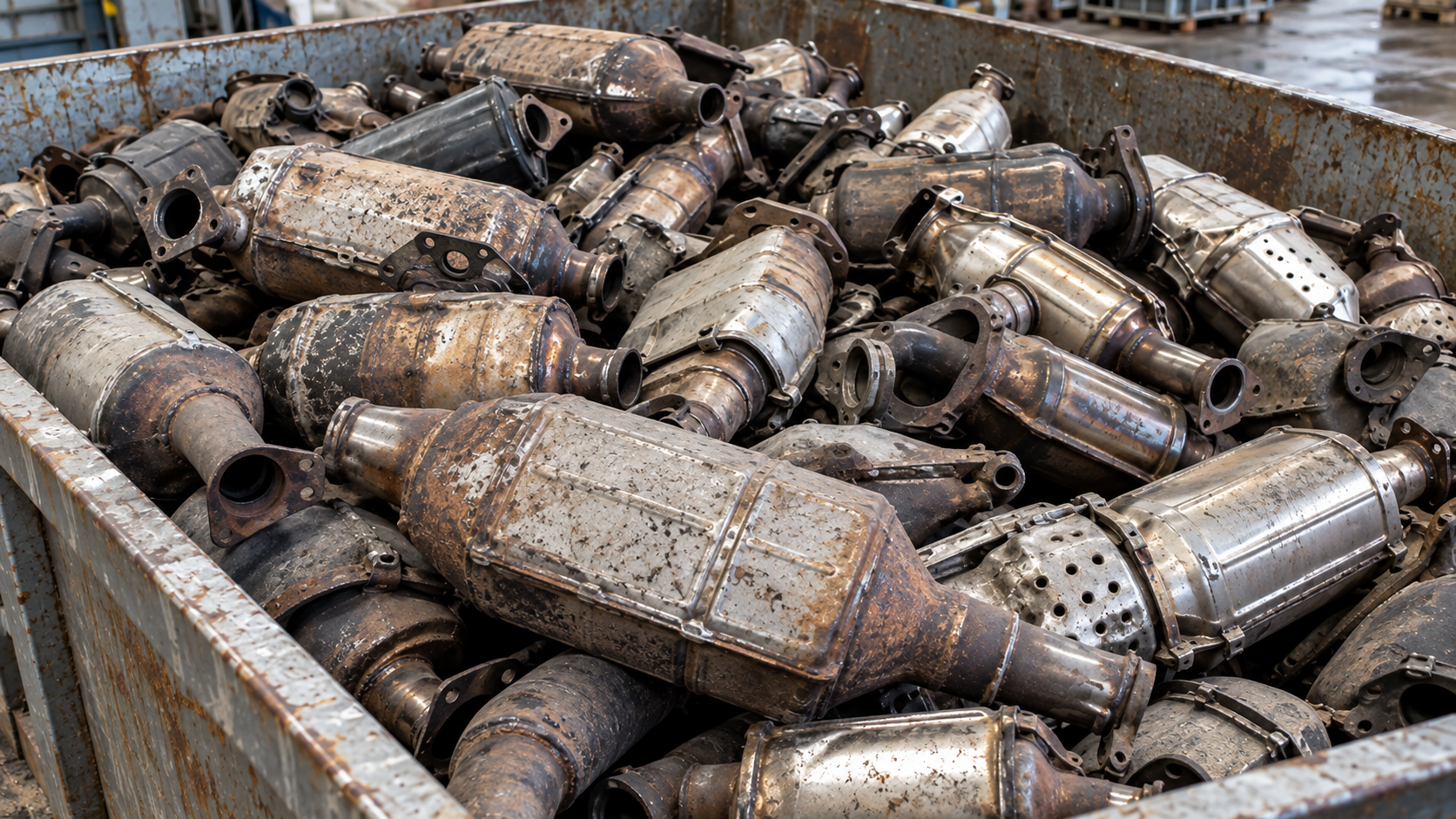
A catalytic converter contains three precious metals: platinum, palladium, and rhodium. They are present in very small quantities on a porous coating applied to a ceramic or metal honeycomb structure inside a steel housing. It is precisely these three metals that make a used catalytic converter worth a lot more than most people realize.
At Krommenhoek Metals, we specialize in catalytic converters for passenger cars, trucks, and industrial processes, as well as particulate filters. We don’t rely on guesswork to determine what’s inside; instead, we carefully analyze the entire catalytic converter.
What's Inside a Catalytic Converter? From the Outside In
A catalytic converter consists of four layers, which, from the outside in, are:
- Housing: a heat-resistant steel or stainless steel casing that is part of the exhaust system.
- Substrate: a monolith, usually made of cordierite-based ceramic, sometimes of metal, composed of thousands of tiny channels.
- Washcoat: a porous layer on the walls of those channels, composed of, among other things, aluminum oxide.
- Precious metals: platinum, palladium, and rhodium, finely distributed throughout the washcoat.
That honeycomb shape actually serves a purpose. The thousands of tiny channels create an enormous surface area, so that just a few grams of precious metal are enough to react with large quantities of exhaust gas.
Most pages about catalytic converters skip over the washcoat and jump from the ceramic honeycomb directly to the precious metals. That’s a shame, because it’s precisely that layer that connects the two. The precious metals aren’t actually on top of the ceramic; they’re embedded in the pores of the coating on top of it. That’s why a catalytic converter’s weight says little about its value, and why expert processing is so essential for properly extracting the metals.
A catalytic converter doesn't filter; it converts
A catalytic converter does not trap harmful substances like a filter does. Instead, it accelerates the chemical reactions that convert those substances:
- Carbon monoxide is oxidized to carbon dioxide
- Unburned hydrocarbons are converted primarily into carbon dioxide and water
- Nitrogen oxides are reduced, producing nitrogen, among other substances
Each metal has its own function in a catalytic converter. Platinum primarily facilitates the oxidation of carbon monoxide and hydrocarbons and is used in both gasoline and diesel vehicles. Palladium has a similar function but is found mainly in catalytic converters for gasoline vehicles. Rhodium plays a different role: this precious metal helps reduce nitrogen oxides and is primarily used in gasoline catalytic converters.
Platinum, palladium, and rhodium are all among the most expensive precious metals in the world. Of these three, rhodium is the rarest.
Does it contain only precious metals?
No. A catalytic converter’s washcoat consists of metal oxides, and depending on the system, it may also contain substances such as cerium oxide. Certain catalytic converters with nitrogen oxide storage also contain barium compounds. While these materials are essential for the converter’s function, its recycling value depends primarily on platinum, palladium, and rhodium.
What is the difference between a gasoline and a diesel catalytic converter?
On the outside, they look alike, but on the inside, they’re completely different. A gasoline catalytic converter typically contains all three metals, with rhodium for nitrogen oxides. A diesel catalytic converter more often contains platinum, sometimes combined with palladium. A diesel engine also often has a particulate filter, but that’s a separate component with its own treatment process.
The amount of precious metal in each car varies
This is where many articles go wrong by citing specific figures. A passenger car catalytic converter typically contains a total of a few grams of precious metal, but there is no fixed amount. The quantity and the ratio depend on:
- the engine type and engine displacement
- gasoline, diesel, or hybrid
- the vehicle model and year of manufacture
- the emissions standard and the type of catalytic converter
That’s why we always measure rather than estimate, using XRF analysis based on the serial number on the housing. That measurement is free, by the way, even for just a handful of units. For orders of 50 units or more, we’ll come to your location with the XRF meter so you can watch the process in real time. You can read more about how our pricing works here.
A used catalytic converter is a raw material, not waste
Precious metals are not depleted during use. While their effectiveness does decline due to contamination, heat, and damage, the metal itself can still be recovered. This also explains why catalytic converters are attractive targets for theft: they still have value. Incidentally, you can also find these same metals in the circuit boards of computers and servers.
Our advice: Turn in your catalytic converter to a company that is a member of the Metal Recycling Federation. Krommenhoek Metals is a member. Here’s how it works with us:
- Send a photo of the serial number via WhatsApp or email
- You will receive a price estimate based on current precious metal prices
- Drop off your items at one of our locations in Rotterdam or Wateringen, any weekday or Saturday morning, without an appointment
- For larger quantities, we'll pick them up or provide a container
- Payment will be made in cash, via Tikkie Terug, or by direct bank transfer
Frequently Asked Questions About Catalytic Converter Content and Recycling
Exactly how much platinum is in a catalytic converter?
That varies by vehicle and model, and it cannot be determined based on weight. The only way to know for sure is to check the serial number.
Can I just turn in a catalytic converter?
Yes, you can stop by without an appointment. Be sure to bring a valid form of identification—it’s required by law—and your bank account number if you’d like to be paid by bank transfer.
Can you also process industrial catalysts?
Yes. In addition to catalytic converters from passenger cars and trucks, we process industrial catalytic converters and particulate filters. For larger shipments, we arrange for on-site pickup or a container.
Need help?
Do you have any questions, or would you like immediate assistance? Our team is ready to provide you with personalized advice and the right solution.